Honesty is the best policy
- the-sovereign-miner
- Job search , Fifo life
- April 10, 2026
Table of Contents
The High Cost of the Shortcut: Why Honesty is Your Best Asset in Australian Mining
Getting your foot in the door of the Australian mining industry is like trying to crack a vault: the rewards are high, but the security is tight. For those looking to secure a Fly-In Fly-Out (FIFO) role, the temptation to “fudge” a resume or provide a questionable reference can be strong, especially when you are competing against thousands of other applicants.
However, in the close-knit world of Australian resources, your reputation is your most valuable asset. Here is why maintaining absolute personal integrity isn’t just a moral choice; it is a career-saving one.
The “Small World” Effect
The Australian mining industry may span a continent, but the community of recruiters, site managers, and HR professionals is surprisingly small. People talk.
If you submit a fake reference or exaggerate your experience with heavy machinery, you are not just lying to one company; you are potentially alerting a network of professionals. Most recruiters have worked across multiple Tier-1 and Tier-2 firms. When a lie is uncovered, you do not just lose the job. You often end up on a blacklist that can follow you for years.
As I write this post I’m reminded of a story I heard recently about a young Argentian man who listed one of his friends as a reference. He listed this person as a “manager” within a mine site and provided her mobile to contact. This young man had got his resume past the application tracking systems, and presented himself well through a phone interview with the recruiter. When the recruiter then called his references, as they always do, they quizzed the referee on basic information such as which site she worked at and what her actual role was. Of course, having never worked within the industry she fumbled on these things, which any legitimately experienced person would easily be able to answer, tipping the recruiter off to the fact that something was amiss. The application was promptly dismissed, with the chances of this person ever securing a role within the industry now severely diminished. The takeaway… Don’t lie. It’s just not worth the risk.
The “Sniff Test” and Site Verification
Experienced mining recruiters have seen it all. They can spot a “padded” resume from a mile away. Common red flags include vague descriptions of specific site-based tasks or references that provide mobile numbers but no verifiable company emails.
Once a recruiter’s “BS detector” goes off, they rarely ask for clarification. They simply move to the next candidate. In an industry where safety and reliability are paramount, any hint of dishonesty suggests you might also cut corners on site, which is a risk no company is willing to take.
The Eye in the Sky: Video Evidence
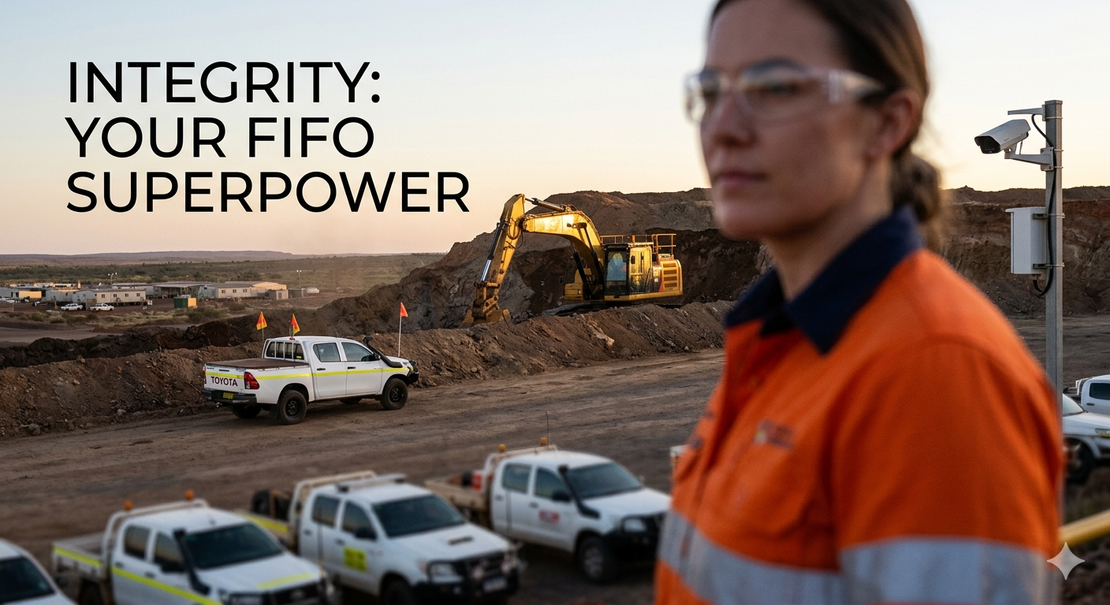
Many people think that if they can just pass the interview, they can “fake it” until they learn the ropes. This is a dangerous gamble. Modern Australian mine sites are some of the most monitored workplaces in the world.
Almost every vehicle and piece of heavy machinery is equipped with sophisticated camera systems and In-Vehicle Monitoring Systems (IVMS). These cameras do not just look outward; many monitor the cabin to ensure operator safety and compliance.
If you claimed to be an expert operator on your resume but your movements on camera show you are struggling with basic controls, the discrepancy will be flagged immediately. Being caught out by video evidence is a fast track to being escorted off site and banned from future contracts.
Safety and the High Stakes of FIFO
In a FIFO environment, honesty is a matter of safety. If you claim to have experience with specific isolation procedures or operating certain equipment when you do not, you are not just “faking it until you make it.” You are creating a physical hazard for yourself and your crew.
Mining companies value trainability over fabricated experience. They would much rather hire a “green” worker who is honest about their skills and willing to learn, than someone who creates a liability by pretending to be an expert.
How to Get In Legitimately
If you lack the experience, the solution is not to invent it. Instead, bridge the gap properly:
- Get Your Tickets: Invest in your White Card, First Aid accreditation, and specialized tickets like Working at Heights.
- Leverage Transferable Skills: Focus on your reliability in other high-pressure environments, such as construction, agriculture, or logistics.
- Be Upfront: Use your cover letter to acknowledge you are new to the industry but emphasize your commitment to safety and the FIFO lifestyle.
The Bottom Line: You only get one chance to build a reputation in the Australian mining sector. A “white lie” on an application might seem like a shortcut, but in the FIFO world, the long way around is the only path that actually leads to the site.