How to Get Into FIFO Mining - A Realistic Guide
- the-sovereign-miner
- Fifo life
- March 8, 2026
Table Of Contents
I get asked this more than anything else. People see the pay rates, hear about the time off, and want to know how to get in. So here’s the honest version - not the recruitment agency spin, just what it actually takes. This is specific to Australia and targeted mainly at those who are green to the industry and looking to get into an underground role, although other types of mines do exist throughout Australia.
What FIFO Mining Actually Is
Australia is one of the most resource-rich countries in the world. Its mining industry is massive, highly diversified, and geographically concentrated in places most people will never visit unless they’re getting paid to be there.
FIFO stands for Fly In, Fly Out. It refers to the fact that mining operations are typically conducted in remote areas, inaccessible by road, requiring workers to fly in by chartered aircraft. You’ll also see DIDO (Drive In, Drive Out) roles advertised for sites close enough to a regional town that a daily commute or weekly drive is practical.
If you strip it right back, most mining comes down to two core methods: surface mining (digging from the top down) and underground mining (tunnelling from below). That’s the simple version. The reality is there are a handful of specialised methods that don’t neatly fit either category - the industry uses whatever method best suits the resource and the geology. Think of it as a toolbox. Open pit and underground are the big tools, but there are others.
The type of mine you end up working at will shape everything from your equipment to your daily routine.
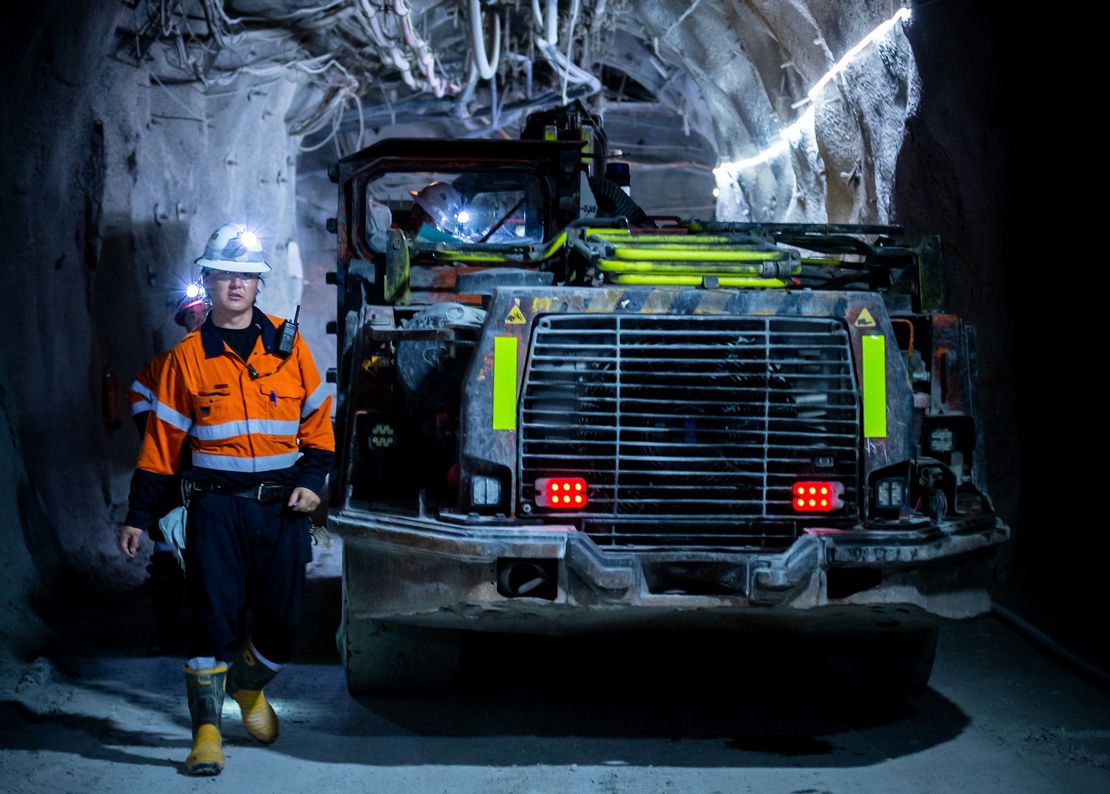
Underground mines operate 24 hours a day, 7 days a week. Workers typically work 12-hour shifts for a set number of days before flying home for their break. This scheduled period on site is called a swing. There are many different roster configurations and these vary company to company and mine to mine, but the most common are:
- 8:6 - 8 days on, 6 days off
- 2:1 - 2 weeks on, 1 week off
- 2:2 - 2 weeks on, 2 weeks off
- 4:2 - 4 weeks on, 2 weeks off
Even time rosters - where your days on equals your days off - are generally preferred for work-life balance. If you’re purely chasing money in the short term, a 2:1 puts more hours on the clock, but be aware the more you earn in a given period the harder the Australian tax system hits you. Something to factor into your thinking early - more on that in the [FIFO tax guide] coming soon.
For a detailed look at what actually happens during a swing, see [what a swing looks like day by day] coming soon.
Who Gets Hired and Who Doesn’t
Getting into an entry-level role in mining can be tricky if you’ve never done it before. Many advertised positions require at least six months of experience, particularly for underground roles. If you don’t have that experience yet, all is not lost. The industry is chronically understaffed and opportunity still exists for people who have what it takes - you just need to be strategic about how you approach it.
If you have a trade qualification - boilermaker, fitter, electrician, diesel mechanic - you’re in strong shape. Experienced operators of heavy machinery are similarly well-positioned. But opportunity also exists for those coming in on a hospitality or housekeeping ticket. The camps that house mining workforces need kitchen hands, camp attendants, cleaners, and store staff to keep everything running. These roles are genuinely entry-level, require minimal experience, and are a legitimate foot in the door. For a full breakdown of what roles exist underground and in camp, see [underground mining roles explained] coming soon.
Tip
If you’re struggling to get traction applying for underground roles with no experience, consider applying for a camp services role first. Get on site, prove yourself, make contacts, and make a lateral move across to an underground role once you have some time getting used to the FIFO lifestyle.
The Tickets and Certifications You Need
Mandatory Minimum
These are the baseline requirements for virtually every mining role in Australia. Get these sorted before you apply - having them in hand signals you’re serious and removes a common reason for rejection.
Budget around AUD $500–$800 to get fully ticket-ready from scratch on the mandatory minimums, and allow 2–4 weeks if you’re doing everything sequentially.
The White Card (CPCWHS1001 - Prepare to work safely in the construction industry) is a nationally recognised safety induction that is mandatory for anyone working on a construction or mining site in Australia.
- Duration: approximately 4 hours
- Cost: around AUD $150
- Available through registered training organisations (RTOs) Australia-wide, online or in person
A minimum Class C manual (stick shift) licence is required. Although the heavy machinery you’ll operate underground is automatic, the light vehicles on site - utes, buses, forklifts - are typically manual. An automatic-only licence will limit your options.
The following three units are the standard minimum and are typically completed together in a single course:
- HLTAID011 Provide First Aid
- HLTAID010 Provide Basic Emergency Life Support
- HLTAID009 Provide Cardiopulmonary Resuscitation
Duration: 4–8 hours depending on provider. Cost: AUD $95–$200. Must be current - certificates expire after 3 years (CPR annually).
Accredited providers: St John Ambulance, Australian Red Cross, First Aid Training Perth CBD.
A standard requirement for most roles across Australia. This is a summary of your offender history and is used by employers to assess suitability.
- Cost: AUD $56
- Digital copies are generally available within 48 hours; hard copies take approximately 15 business days and carry an additional fee
- Apply through the Australian Federal Police
Warning
A criminal history does not automatically disqualify you - the nature of the offence, how long ago it occurred, and its relevance to the role are all taken into account. Be upfront with recruiters rather than hoping it won’t come up.
Desired
These aren’t always required but having them puts you ahead of candidates who don’t.
HLTAID014 Provide Advanced First Aid goes beyond the basics and covers patient assessment, management of complex injuries, and extended care in remote settings. Highly valued for underground roles where medical evacuation can take hours.
- Duration: 1–2 days
- Cost: AUD $250–$400
RIIWHS204E Work safely at heights covers the use of fall arrest systems, harnesses, and elevated work platforms. Not universally required for underground roles but expected for surface roles, shutdown work, and processing plant positions.
- Duration: approximately 1 day
- Cost: AUD $150–$250
Role-Specific
Beyond the mandatory minimums, the tickets you’ll need depend on the role you’re going after. Common examples include:
Required for haul truck and underground truck roles. An HR licence covers rigid vehicles over 8 tonnes, HC covers combination vehicles. Check the job ad carefully — some roles specify one over the other.
Required for stores and warehouse roles. Issued as a High Risk Work licence through your state’s work safety regulator. In WA this is WorkSafe.
Covers scissor lift and boom lift operation. Required for work at height on surface, processing plants, and shutdown roles. The RIIWHS204E Working at Heights ticket is a common companion requirement.
Required for crane and lifting operations. Dogging (DG) covers the slinging and directing of loads. Rigging licences (RB, RI, RA) cover increasingly complex lift configurations. Both are issued as High Risk Work licences.
Required for confined space work underground and on surface. Covers the use of atmospheric monitoring equipment to test for oxygen deficiency, flammable gases, and toxic contaminants before entry.
Additional Requirements
These aren’t tickets you organise yourself - they’re part of the employer’s pre-employment process and will be arranged by them if your application progresses. Don’t waste money trying to do these independently as employers won’t accept externally arranged results.
All mining employers conduct pre-employment drug and alcohol testing and ongoing random testing on site. Standard urine screening tests for cannabis, amphetamines, opiates, cocaine, and benzodiazepines. Some sites use oral fluid (saliva) testing. Cannabis in particular stays detectable in urine for weeks after last use - factor this in if you’re planning to transition into mining.
A comprehensive pre-employment medical conducted by an occupational physician assesses your fitness for the physical demands of the role. Typically includes vision and hearing tests, spirometry (lung function), musculoskeletal assessment, and a review of your medical history. The employer arranges and pays for this. Be honest - attempting to conceal medical conditions that later cause an incident underground creates serious legal and safety problems.
How to Actually Find the Jobs
This is where most guides fall short. They say “apply online” and leave it at that. Here’s what actually works.
Job boards worth your time:
- Seek - the main game in Australia for mining roles. Set up alerts for “underground” + your target state
- Indeed - worth checking but tends to aggregate from Seek anyway
- Mining People International (MPI) - specialist mining recruiter with genuine site relationships
- Programmed - large labour hire firm with significant mining contracts
- Direct company career pages - for the major contractors and miners, applying direct cuts out the recruiter layer
Recruitment agencies - useful or not?
Agencies have their place. They hold exclusive contracts with some sites and genuinely place people. The downside is they’re volume operations - you’re one of hundreds of applications. Register with two or three specialist mining recruiters and treat them as one channel, not your whole strategy.
I personally used KCA Site Services and can thoroughly recommend them. They’re not just a recruiter either. They also provide a range of services to their mine owner and operator clients, and are well respected by these clients.
The most underrated approach:
Know someone already on site. A referral from a current employee carries serious weight. Mining is a small world - if someone vouches for you it gets your application in front of a human rather than an ATS filter. If you don’t know anyone yet, LinkedIn and mining forums are worth cultivating before you need them.
Realistic timeline:
From starting your tickets to your first swing, budget 6–12 weeks if everything goes smoothly - longer if there’s a medical or background check delay.
What Your First Application Needs to Look Like
Mining resume format is different from a corporate resume. Keep it to two pages maximum. I prefer a single A4 page printed on both sides.
Lead with your tickets and certifications - put them near the top, not buried at the end. List your equipment experience specifically - not “operated machinery” but “LHD operator, 12 months, underground gold, WA”. If you don’t have mining experience, translate your transferable skills directly - a boilermaker is a boilermaker, a logistics coordinator is a logistics coordinator.
Cover letters are rarely read for trade and operator roles. A brief, well-written one doesn’t hurt but a bad one does - if in doubt, leave it out.
Red flags that get you screened immediately: gaps in employment with no explanation, vague job titles, no tickets listed, spelling errors, and applying for roles you’re clearly not qualified for.
What to Expect on Your First Swing
The induction process alone will consume most of your first week. Every site has its own induction requirements on top of your pre-existing tickets. You’ll cover emergency procedures, site rules, communication protocols, and meet some of the management and operations crew.
The first week can be overwhelming. Lot’s of paperwork, presentations, and sitting around idle. When you get through this you then move on to getting to know your role. This too can be overwhelming. The underground environment is unfamiliar, the equipment is different from anything you’ve operated on surface, and the culture has its own rhythms and unwritten rules. This is normal. Most experienced miners remember their first swing as a blur. Not all information you need to know will be conveyed properly, or if at all during induction. It’s up to you to learn what you need to learn in order to get up to speed.
The learning curve flattens fast. By the end of your second swing you’ll have your bearings. By the end of your third you’ll feel competent and at home.
The Recruitment Process
Once you apply, here’s what to expect:
- ATS screening - your resume is filtered by keywords before a human sees it. Use the exact terminology from the job ad.
- Phone screen - a brief call from a recruiter to verify the basics. Be available, be direct, have your ticket details and references to hand.
- Interview - usually a structured behavioural interview (tell me about a time when…). Safety scenarios are common.
- Pre-employment checks - medical, drug and alcohol, police clearance, reference checks. This stage takes some time.
- Offer and mobilisation - once checks clear, you’ll receive a formal offer and be given a mobilisation date for your first swing. Site clearance can take up to a month so be prepared to hurry up and wait.
The Honest Downsides Nobody Mentions in Job Ads
The pay is real. The roster is real. But so is the other stuff.
Being away from your family is harder than you think it will be, especially in the first few months. The camp environment can be isolating - you’re living and working with many people that are often on different swings than you so the faces are always changing. With enough time you’ll make friends and feel more like you are part of the team. Camp politics are real. Cliques exist. The food and facilities vary enormously between sites and operators.
The physical demands accumulate. Twelve-hour shifts underground, six or seven days in a row, in hot or cold conditions depending on the mine and the depth. Your body takes a hit over time.
And the mental side gets less attention than it deserves. FIFO has a well-documented relationship with depression, relationship breakdown, and substance use. This doesn’t happen to everyone but it happens more than the industry likes to acknowledge. Go in with your eyes open.
Is It Worth It?
For the right person at the right time - absolutely yes. The financial opportunity is genuine. The time off, when structured well, is genuinely better than most 9-to-5 jobs. The work itself can be deeply satisfying.
But FIFO suits some people and breaks others. If you have strong relationships at home that can handle the separation, a clear financial goal you’re working towards, and the ability to keep your head straight in a remote environment - you’ll thrive. If you’re going in without a plan, just chasing the money with nothing to show for it at the end of each swing, you’ll burn out.
Go in with a plan. Treat the income as the tool it is.
Got questions about getting into FIFO work? Drop them in the comments or reach out.
Contact Me