Underground Mining Roles
- the-sovereign-miner
- Mining
- March 24, 2026
Table of Contents
If you’re thinking about getting into mining, or you’ve just landed your first site induction and you’re trying to make sense of the org chart, this post is for you. Underground mining operations run on a surprisingly large and specialised workforce, and most of it is invisible to anyone who hasn’t worked on site. The roles below cover everything from the production crews driving development underground to the camp staff keeping the whole operation fed, cleaned, and running on schedule.
Not every mine has every role listed here. A small operation might combine several of these into one position, or contract out whole departments. A larger mine, like a Tier 1 gold operation in the Goldfields, will have dedicated people in most of these seats. Either way, understanding what each role actually does, and where it sits in the mine hierarchy, is useful whether you’re job hunting, switching disciplines, or just trying to figure out how the place actually functions when you’re new on site.
I’ll list each under the department they typically fall under:
Production
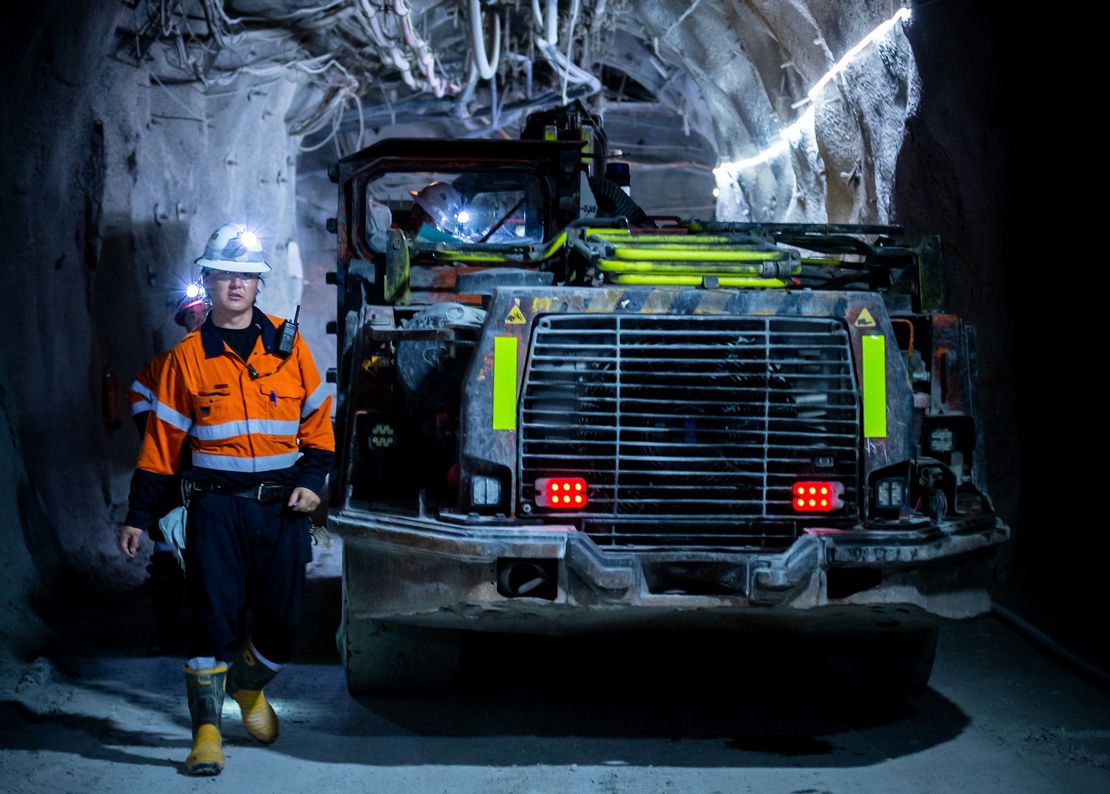
Operates a jumbo drill rig to drill blast holes in development headings and stope faces. The primary development role underground — if the jumbo isn’t moving, nothing else is either.
Operates a Load Haul Dump (LHD) machine — a large articulated loader — to muck out blasted ore and waste rock from stopes and development headings and tip it into ore passes or trucks.
Drives large underground haul trucks to transport ore and waste from ore passes to the surface or to ROM (run of mine) pads. Works in tandem with LHD operators.
Operates raise boring equipment to drill large diameter holes vertically or at angle — used for ore passes, ventilation raises, and escape ways.
Operates production drilling rigs to drill long blast holes in stopes for bulk blasting. Works in conjunction with the shot firer to prep stopes for production blasts.
Licensed to handle, transport, and fire explosives underground. Responsible for charging blast holes, wiring up the shot, and initiating the blast. One of the most heavily regulated roles on site.
Drills core samples for grade control and geological exploration. Works closely with geologists to identify ore zones and guide the mine plan.
Maintenance & Services
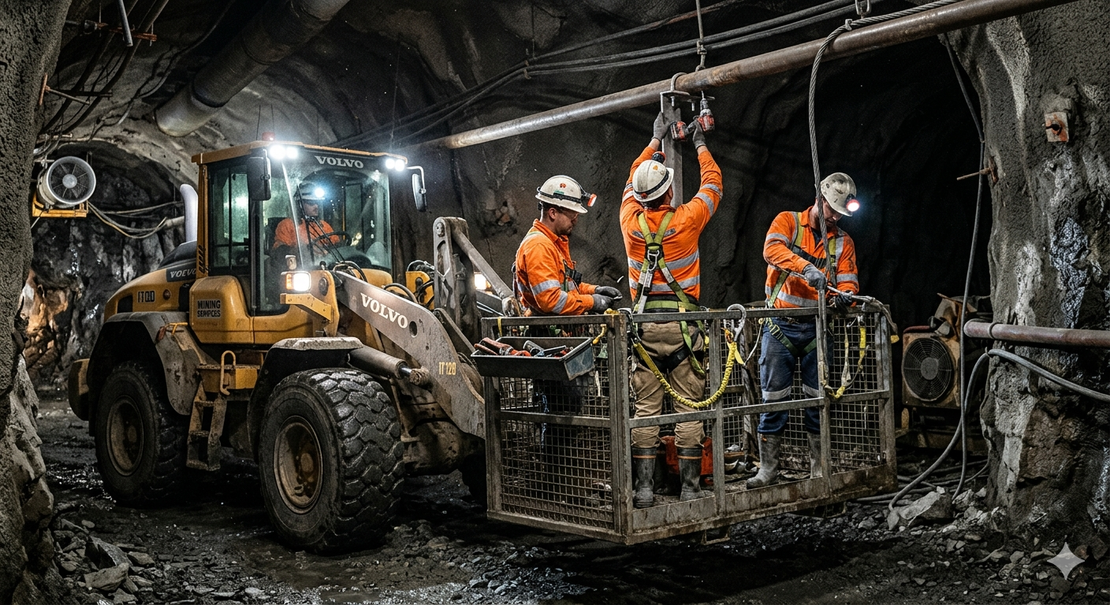
Responsible for extending and maintaining services to the undeground mine including, fans, air and water reticulation services, communications and signal cables.
Entry-level underground role. Responsible for supplying consumables, ground support materials, and equipment to crews underground. A physically demanding but critical logistics role — and the traditional way to learn the job from the ground up.
Fabricates and repairs steel structures, chutes, ore passes, and other underground infrastructure. Works from drawings or on the fly to keep the mine’s steel work in shape.
Maintains and repairs underground mobile equipment — LHDs, trucks, jumbos, bolters. Works in often confined and awkward conditions to keep the fleet operational.
Installs and maintains high and low voltage electrical systems underground — switchrooms, substations, reticulation, lighting, and equipment. Must hold specific underground electrical licences.
Operates paste fill or cemented aggregate fill (CAF) plants that pump backfill material into mined-out stopes to stabilise the ground and allow adjacent stopes to be mined safely.
Technical & Engineering
Supervises a crew of miners on shift — coordinates tasks, enforces safety, solves problems underground, and reports production to the shift boss. The first line of operational leadership.
Manages the entire underground operation on shift. Responsible for production, safety, personnel, and equipment across all working areas. Holds statutory responsibilities under mining regulations.
Maps geology underground, logs drill core, interprets grade data, and works with the mine planner to define ore boundaries. Underground geology can change fast — the geologist keeps the mine on ore.
Surveys underground workings to produce accurate plans, set out drill drives and stope limits, and track actual versus planned development. Uses laser scanning and total stations underground.
Designs the mine — develops short, medium, and long-term mine plans, designs stopes and development sequences, and optimises the extraction schedule to maximise ore recovery.
Designs and maintains the underground ventilation system — fans, ducts, regulators, and raises — to ensure sufficient fresh air reaches all working areas and diesel fumes and blast gases are cleared.
Monitors ground conditions, designs ground support systems (bolts, mesh, shotcrete), and assesses the stability of stopes and development. A critical safety role in deep or complex orebodies.
Surface & Processing
Operates the processing plant — typically a CIL (carbon in leach) or CIP (carbon in pulp) circuit for gold — to crush, grind, and extract metal from ore. Shift-based role with a strong focus on metallurgical performance.
Optimises the processing circuit to maximise gold recovery. Monitors reagent dosing, circuit performance, and assay results. Works between the lab and the plant.
Operates the winder (hoist) at shaft mines to raise and lower cages, skips, and personnel. A licensed, safety-critical role — winder operators hold statutory tickets and are responsible for everything that moves up and down the shaft.
Operates surface mobile equipment — ADTs, graders, water trucks, scrapers — on the mine surface, ROM pad, and waste dumps.
Safety & Training
Monitors safety compliance underground, conducts hazard inspections, investigates incidents, and supports the workforce with safety systems and procedures. Reports to the site safety manager.
Delivers inductions, competency assessments, and equipment training to new and existing workers. Responsible for maintaining training records and ensuring the workforce is properly ticket-qualified.
Trained in mine rescue, first aid, and emergency response. Usually a secondary role held by experienced underground workers. ERT members respond to fires, collapses, and medical emergencies underground.
Camp & Facilities Roles
Catering & Kitchen
Prepares meals for the entire site population across all shifts. Camp food is a big deal on FIFO sites — a good cook is worth their weight in gold. Expected to cater for dietary requirements, produce high volumes, and maintain food safety standards.
Supports the kitchen team with food prep, dishwashing, serving, and keeping the kitchen clean and compliant. One of the most common entry-level FIFO roles — no experience required beyond a food handling certificate.
Manages the catering and accommodation operation on site — oversees kitchen staff, manages rosters, handles supply orders, and ensures the camp runs smoothly for the mining workforce.
Manages the site store — receives deliveries, maintains inventory, issues parts and consumables to maintenance and operations crews, and keeps the warehouse organised.
Accommodation & Facilities
Cleans and services accommodation rooms, ablution blocks, common areas, and the recreation facilities. Works to a room rotation schedule and is responsible for linen changes and general camp presentation.
Manages the camp laundry — washing, drying, and distributing work uniforms and personal laundry for the site workforce. Industrial laundry scale on large sites.
Maintains camp infrastructure — plumbing, air conditioning, electrical (minor), carpentry. Keeps the accommodation village, wet mess, gym, and common areas in working order.
Cleans surface infrastructure — offices, crib rooms, change rooms, workshops, and amenities. Distinct from camp attendants who focus on accommodation.
Administration & Logistics
Manages site administration — visitor inductions, accommodation bookings, mail, phone, and general office duties. Often the first point of contact for new arrivals on site.
Manages timesheets, payroll data, and personnel records for the site workforce. Coordinates with head office payroll.
Coordinates the movement of equipment, parts, and supplies to and from site — manages freight bookings, tracks deliveries, and liaises with the supply chain team.
Books flights, accommodation, and transfers for FIFO workers. Manages roster changes, emergency travel, and ensures the site is correctly manned at all times.
Health & Wellbeing
Provides first aid, manages injuries and illnesses on site, conducts pre-employment medicals and fitness for work assessments, and maintains the medical centre. A critical and often underappreciated role on remote sites.
Provides peer support and mental health first aid to the workforce. FIFO mental health is a genuine issue — isolation, long hours, and time away from family take a toll. Increasingly common on well-run sites.
Maintains gym equipment, organises site recreational activities, and manages the wet mess and common room facilities. On larger sites this is a dedicated role; on smaller sites it’s usually additional duties for another role.
Security & Access
Controls access to site — checks inductions, manages the gatehouse, conducts vehicle searches, and monitors CCTV. Also manages breath testing and drug and alcohol screening on some sites.
Manages the explosives magazine — receives, stores, issues, and accounts for all explosives on site. Holds a specific explosives licence and is responsible for strict compliance with explosives regulations.